


Mapping Human Talent Requirements for Jerusalem’s Advanced Industry

The Samuel Neaman Institute for National Policy Research, together with The Jerusalem Development Authority, Jerusalem Municipality, The Social-Economic Forum and The Employers Administration initiated a project for encouraging discharged soldiers to study and work in Jerusalem. The main aim of this project is to identify trends in human talent requirements within the Jerusalem labor market.
A Project for Developing an Infrastructure Corridor between Haifa Port and the Jenin Border Checkpoint

The goal of this specific project, submitted by the Samuel Neaman Institute as part of the general project, is to develop an effective and sustainable infrastructure corridor between Haifa Port, Gilbo’a Region, and the border crossing point near Jenin, adjacent to which an industrial zone and logistics centers will be built, on both sides of the border.
Technion’s Contribution to Israel and to the Development of Technology in the World, Through Its Graduates
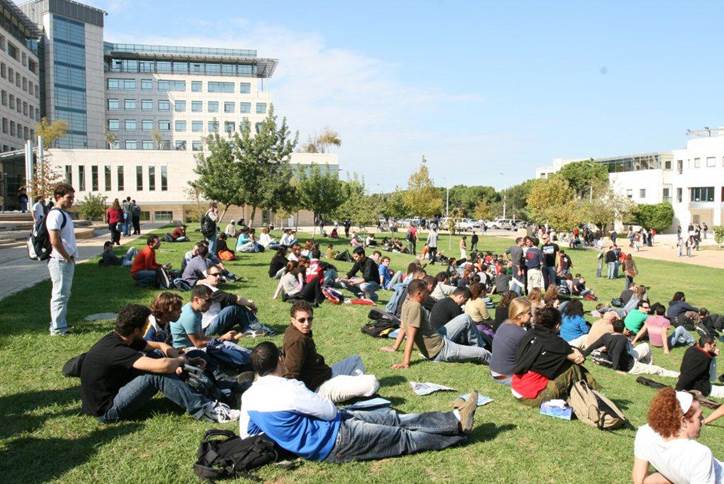
This project documents the contribution of Technion faculty and graduates, to Israel and to humanity. It includes a Web-based survey of Technion graduates, to which over 4,000 alumni/ae responded. The results of the survey were analyzed and processed; we extrapolated the data to represent the population of all Technion graduates since the Technion was founded.
Innovation in the Service Sector

This initiative by the Samuel Neaman Institute with joint funding of SNI and the Chief Scientist at the Ministry of Industry, Trade and Labor, is designed to examine innovation in the service sector for the first time in Israel.
Policy Incentives for Knowledge Creation

The project is implemented under the Seventh Program of the European Union (FP7), a consortium that consists of seven countries (Italy, Germany, France, Spain, Poland, the UK, and Israel). The purpose of the project is to examine empirically the role of the demand side in the creation of technological knowledge, recognition of technological and organizational innovation, and encouraging the increase in productivity. The project is formally complete and our contribution was expressed in five outputs.
Is there a Shortage of Academic Degree Holders in Science and Technology?

This research extends a previous study by the authors on “The Role of Research Universities in the Israeli R&D System” by examining the possibility of a growing shortage in recipients of academic degrees in science and technology (S&T).
Electric Vehicles in Israel

Electrification of the transportation sector serves the goals of reducing oil-dependency, lowering harmful air pollution in densely populated areas and decreasing greenhouse gases emissions, through the superiority of electric drivetrains in energy efficiency, compared to the conventional internal combustion engines. However, one of the main barriers for electric vehicle (EV) adoption remains the charging infrastructure availability.
Estimation of “Intel Israel” contribution to the National Economy

This research is part of our attempt to examine the issue of large companies’ contribution to Israel national economy. The contribution of “Intel Israel” to the economy was examined in three “contribution planes”: the direct contribution, the aggregate contribution and the non- tangable contribution. The non- tangable contribution was partially quantified to monetary values. According […]
Artificial Intelligence, Data Science, and Smart Robotics

The aim of the project is to present an up-to-date and complete picture of the current activities in academia and industry in the areas of Artificial Intelligence, Data Science and Smart Robotics, and to examine the possibilities of advancing these fields, as is being done in many advanced countries.
Models for Translational Medical Research in Israel
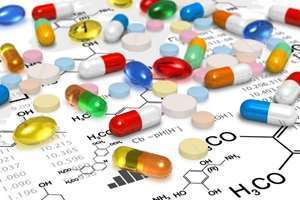
This project examines various models for the translation of academic discoveries ‘from bench to bedside’ to create innovative medications. The research examines how different countries in the world support basic biomedical academic discoveries and advance them towards industrial applications. The observation of these models can support the local pharmaceutical eco-system in leveraging Israel’s academic excellence to create societal and economic benefits. In addition, the research examines successful buildups of pharmaceutical eco-systems, in which the academy is a key player, in comparable countries such as Denmark and Singapore.