


Energy Forum 23: Using wind energy in Israel
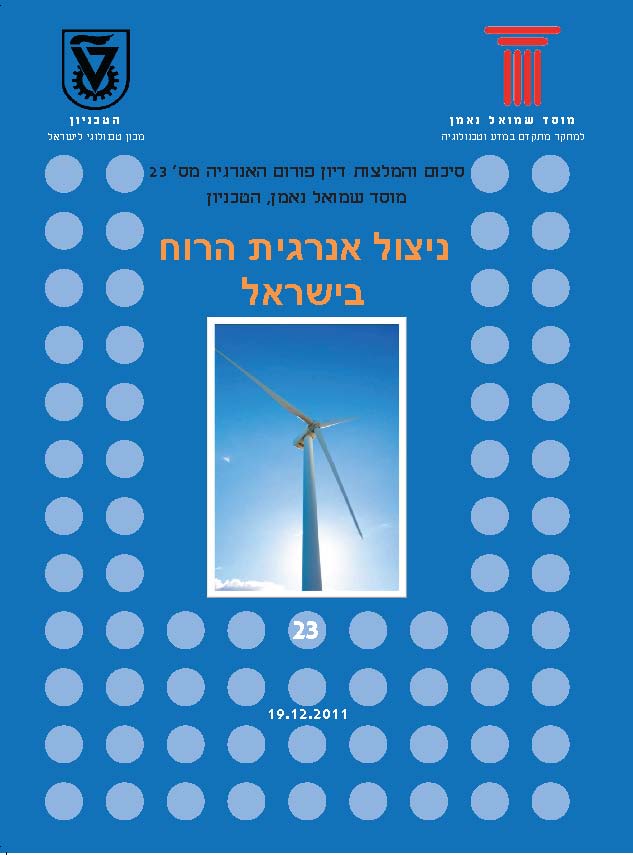
Electric power generation by wind turbines is growing increasingly around the world, accounting currently for a significant percentage of the utilization of renewable energies, in both developed and developing countries.In addition to the benefit resulting from the use of wind energy to the energy economy of Israel – in the field of pollution reduction and […]
A comparative study on the scientific and technological research in Israel and some middle eastern countries, using quantitative indicators, second ed
The study presents a comparative examination of the development process of scientific and technological research that has taken place in the Middle East, especially in the more advanced countries, and in Israel. The data presented are based on two main indices: the number of publications and the average citations per publication. The data indicate that […]
Energy Forum 22: Nuclear power station in Israel
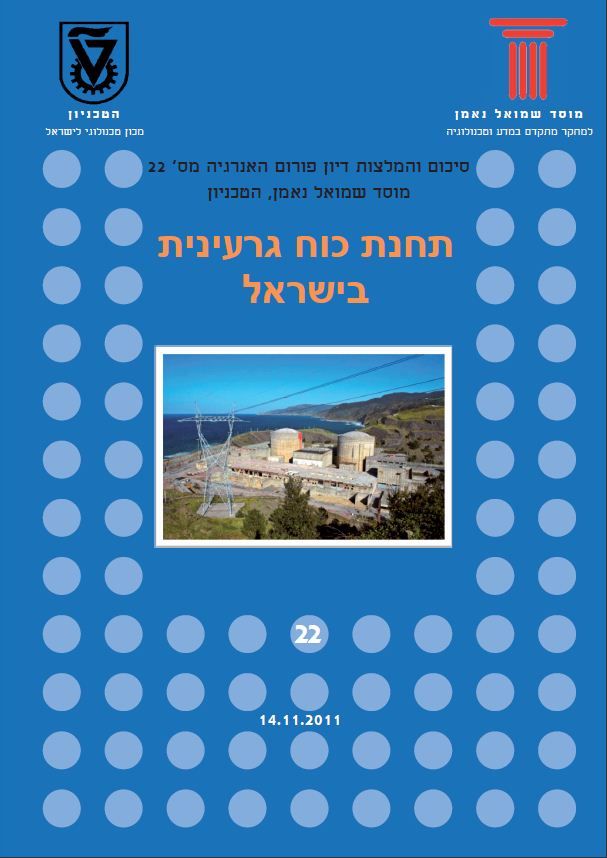
A nuclear power station as part of the Israeli electricity market had been considered since the 1970’s, as part of the regulators goal to diverse the fuel mix and lower energy security risks. Opposed to the transition from liquid fuel based production to coal, which was a natural evolution yet not a simple one, the […]
“Toward Mapping National Innovation Ecosystems: Israel’s Innovation Ecosystem”
We present a method for building visual national innovation ecosystem maps, showing a country’s full innovation system, and illustrate it by constructing and presenting such an innovation map for Israel
ICCIC – Israel Climate Change Information Center – report #1– existing literature and information review, knowledge gaps and priorities for completion
In accordance with a decision of the Israeli Government (No. 474 – June 2009), in March 2011, the Ministry of Environmental Protection established a knowledge hub, the Israeli Climate Change Information Center (ICCIC). The mission of ICCIC is to assemble the existing knowledge and scientific research regarding adaptation to climate change, identify research gaps and […]
A comparative study on the scientific and technological research in Israel and some middle eastern countries, using quantitative indicators

The study presents a comparative examination of the development process of scientific and technological research that has taken place in the Middle East, especially in the more advanced countries, and in Israel. The data presented are based on two main indices: the number of publications and the average citations per publication. The data indicate that […]
National Environmental Priorities of Israel, Position Paper VII : greenhouse gases mitigation plan in Israel, 2011

The work of the Samuel Neaman Institute in the field of the environment is considered significant and is an important resource for decision makers in Israel. One of the Institutes’ main roles is to bridge between academia, industry and governmental decision makers by offering the capability of providing government agencies with applicable and timely information […]
Needs and priorities in the Haifa bay development towards a balanced prosperity
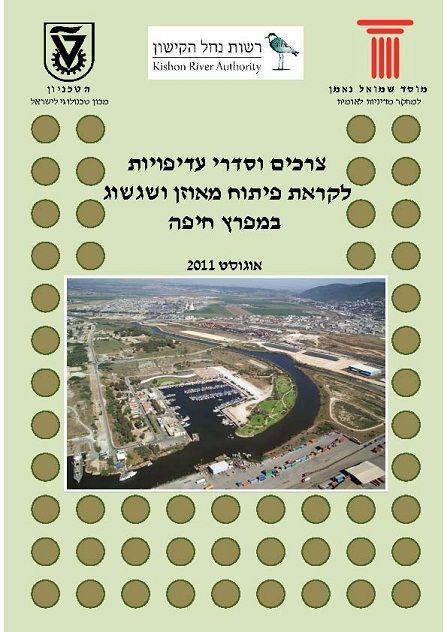
During February 2011, a workshop was held at Samuel Neaman Institute in cooperation with the Kishon River Authority, with the purpose to define the major issues for the development and prosperity of the Haifa bay area, and identify the correct balance between them, and by doing so achieving the goal of long term planning and […]
Strategic Innovation Policy (STE-WP-44)
Strategic Innovation Policy (SIP) emphasizes the importance of embedding innovation policy decisions (broadly defined to include science, technology, higher education policy, and policies to promote entrepreneurship and venture capital) within a fixed, knowledge-based strategic system. Creating a vision, identifying priority areas, and establishing a coherent set of priorities must occur before the design and implementation of […]
Evolutionary Interpretation of VC Policy in Israel, Germany, UK and Scotland (STE-WP-45)
Despite many attempts to develop high-impact VC policies during the 1990s in Europe , most VC markets in Europe are still underdeveloped. Many of these policies were based on ‘traditional’ VC policy involve a mix of monetary incentives and institutional changes. In this paper, we present an alternative evolutionary VC policy, which is based on […]