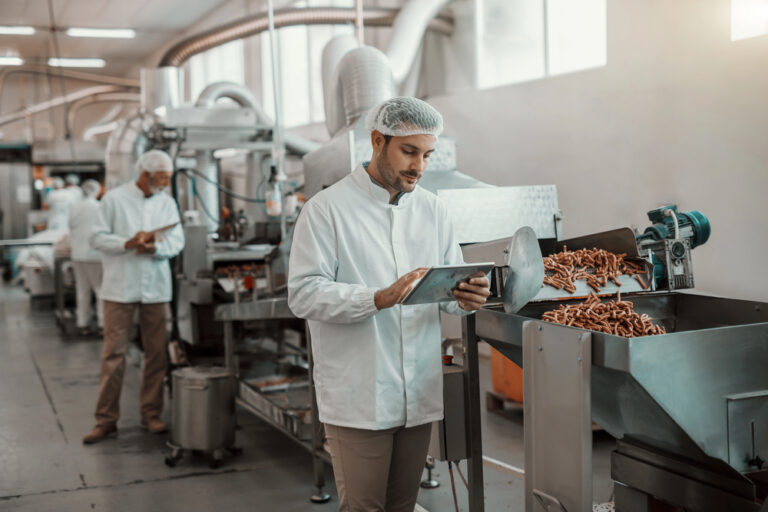



The report “The Role of the Food Industry in the Food Security Plan 2050” presents a broad in-depth picture of the food system in Israel and emphasizes that the food industry is the critical link that connects agriculture, imported raw materials and imports, regulation, technological development and the public capacity to maintain an available, healthy and sustainable diet. The key insight that emerges from it is that Israel’s main challenge in the coming decades is not only growing and producing food, but the ability to create a resilient food system that combines a strong and competitive industry, technological innovation, long-term planning, workforce training and cross-sectoral cooperation.
The report shows that without a well-established, productive and flexible food industry, it will not be possible to achieve national food security goals. The food industry is the executive arm that has the power to translate policy into actual products – from establishing standardized emergency stocks, through absorbing agricultural produce and diversifying sources of raw materials, to improving the nutritional values of products and moving towards uniform health standards and high productivity that enables competitiveness. One of the main conclusions is that deepening dependence on imports increases national vulnerability, and therefore Israel must strengthen local production capacity, especially in essential products, while investing in technologies that save raw materials, in recycling by-products and in developing non-animal protein.
On the opportunities side, the report identifies exceptional technological capabilities in the Israeli ecosystem – in precision agriculture, smart greenhouses, food tech, robotics and AI – that could propel the local industry forward, but they are not being realized due to a combination of regulatory barriers, lack of incentives and outdated infrastructure. The main proposed goal is to build a “smart food system”, which relies on data, digital control throughout the chain, and a resilient industry that is able to adapt quickly to external events and continue to provide food to the entire population even in geopolitical or climatic emergency conditions. In addition, the report calls for the creation of a training and professionalization system that will ensure the availability of quality manpower, because a continuous shortage of skilled workers is a strategic barrier that could harm all the growth engines of the industry. Another conclusion is that health aspects should become an integral part of food system planning. The industry needs to lead product reformulation, reduce sugar, salt and saturated fat, and develop products with improved nutritional values that are consistent with a broad vision of a sustainable food system. In doing so, it supports national policies for healthy nutrition and helps meet long-term public health goals. At the same time, it must significantly expand the use of technological solutions to extend shelf life, reduce food loss and waste, and increase logistics efficiency. The government must strengthen the industry’s motivation to achieve these goals and support bottlenecks to achieve them.
The chapter dealing with the State Comptroller’s report reveals a clear picture: the lack of an integrated factor, under-preparedness of essential factories, poor deployment of emergency stocks, and increasing dependence on imports constitute a strategic risk. The conclusion is that strengthening the industry must be a national task, with clear policies, incentives for investment in infrastructure, coordinated regulation, and the development of rapid production and absorption capabilities for emergencies. In conclusion, the report calls for the adoption of a systemic approach in which the food industry transforms from being engaged in “product production” to a strategic player in shaping national resilience. It proposes to develop an innovative, multi-layered and geographically distribu