
Industrial Symbiosis in the North of Israel
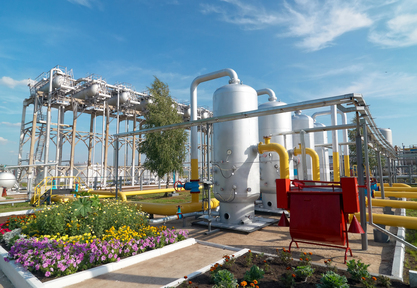
The term “Industrial Symbiosis” describes a situation in which an industry develops a symbiosis with another industry in a beneficial way for both parties, so that the waste of one organization can serve as raw materials for the other industry. As part of a pilot initiated by the Ministry of Economy, 4s LTD. promotes the project in the North of the country, with Dr. Fortuna and prof. Ayalon as consultants.
University-Industry Relations

Review and critical evaluation of university-industry relations based on data and quantitative indicators. Development of insights regarding optimal policy and models to balance between technology commercialization and technology transfer, which is largely based on cooperation with industry to support industrial research. Recommendations for policy steps based on the insights resolved, addressing the point of view of the well-being of society and national economy.
Israel 2028: Vision and Strategy for Israel

Continuing the efforts to actually implement the program “Israel 2028 – Socio Economic Vision and Strategy in Global World”, the Samuel Neaman Institute initiated several projects designated to prepare a multi-annual implementation programs, in collaboration with government agencies.
Energy Efficiency in the Milking Center of Ein Harod Ihud

The goal of this project was to examine means for the reduction of energy use or lowering energy costs in milking centers, and to propose measures that will include energy savings based on electricity and fuel consumption with a possible addition of solar energy, while meeting economical benefit criteria.
Enlarging Water Supply in Israel Through Non Revenue Water (NRW) Reduction and Prevention of Sewage Leakage

The report requested by the National Inquiry Committee, aiming to investigate the water crisis in Israel. The report indicates the loss of fresh water from water distribution and leakage in the order of 64 million cubic meters per year, and leakage of sewage water of estimated 100 million cubic meters per year. The study did not include water losses by the rural sector.
Proceedings of The International Conference On Privatization In Higher Education

The S. Neaman Institute is leading a movement for critical examination of the university of the future and higher education in Israel. In this context, in December 2004, the Institute sponsored an international scientific conference entitled “The Transition to a Mass Higher Education System – International Comparisons”, in cooperation with the United States-Israel Educational Fund, which manages the Fulbright Program for student and faculty exchanges, and the ISEF Fund.
Innovation 2011 – Active Industrial Policy for leveraging Science and Technology and Israel’s Unique Culture of Innovation.

The program commenced at the end of 2009 and ended in 2011. The project was initiated by the U.S.-Israel Science and Technology Foundation, was authorized by the Minister of Industry, Trade and Labor and led by the Chief Scientist of the Ministry. Innovation 2011 is a strategy for implementing the mission outlined in “Israel 2028 –Vision and Strategy for Economy and Society in a Global World,” initiated by the U.S.-Israel Science & Technology Foundation and presented to the Government of Israel.
National Infrastructure in Israel for the Year 2048

This is an ongoing project that deals with long-term planning on developing national infrastructures. Planning long-term infrastructure is of great importance for Israel for at least three reasons: the limited physical dimensions of the country; the continued relatively rapid demographic growth; and the long time required for planning and execution of infrastructure projects. Among the main goals of the research is to keep options open in the long-term, remove barriers that would prevent the construction of strategic facilities and networks, and a coordinated and optimized use of the limited areas of the country.
Cooperation Policy in Business and Science with East Asia

Within the national policy framework to expand cooperation with the East, an issue that was discussed in the past has been raised again in practical terms, namely the collaboration between Israeli industry and leading industries in China and India. Two large Israeli companies were recently acquired by leading companies of China and India; the company “Makhteshim Agan” was acquired by Chem China and the company “Taro” were acquired by Sun Pharma, a well-known Indian company.
Evaluating the NOFAR Program
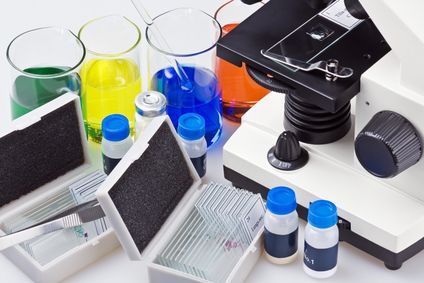
The NOFAR program was conceived as part of the implementation of the recommendations made by the “Monitor Report,” and stresses the need to establish a fund to support the development of inventions in the fields of biotechnology and nanotechnology that have a commercial potential in universities, so as to increase the chances of successful transfer of the technology from the academy to industry. The program helps build a bridge between the basic research and the applied research at the stage at which industry has not yet recognized the idea as having a commercial potential.