
The National Skills Interface Program in STEM Subjects -Summary Report 2012-2015 and towards 2026

We live in an era where the pace of technological, economic and social change is faster than ever. The world of work is constantly evolving, and skills that were considered essential in the past may lose their importance, while new skills become critical to success. In this dynamic reality, the education system faces a huge […]
The Shared Core of Israel’s Public School System – Policy Paper – Intermediate Report

The interim report of “The Shared Core of the School System” project presents the research conducted to describe Israel’s public education system and to map the communalities across its various educational factions. The report outlines the legal guidelines and government regulations that define the de jure structure of the system and illustrates their implications through an analysis […]
Science, Technology and Innovation Indicators in Israel: An International Comparison 2024 – Extended Topic: R&D and Innovation in the Fields of Life Sciences and Health, Agri-Food-Tech, Energy and Climate-Tech. Indicators and Current Situation in Israel

This report was prepared as part of the national tender “developing a comprehensive national policy for advancing scientific research in Israel”, commissioned by the National Council for Research and Development at the Ministry of Innovation, Science and Technology. Its goal is to provide a comparative data infrastructure to support decision makers in three key areas: […]
Science, Technology and Innovation Indicators in Israel: An International Comparison -2024 – Part a – Key figures
This report, “Indicators for Science, Technology and Innovation in Israel,” was prepared as part of the national tender “developing a comprehensive national policy for advancing scientific research in Israel.” The project was commissioned by the National Council for Research and Development at the Ministry of Science and Technology. The research involves an annual publication featuring […]
Science, Technology and Innovation Indicators in Israel: An International Comparison -2024 – Part a – Key figures

This report, “Indicators for Science, Technology and Innovation in Israel,” was prepared as part of the national tender “developing a comprehensive national policy for advancing scientific research in Israel.” The project was commissioned by the National Council for Research and Development at the Ministry of Science and Technology. The research involves an annual publication featuring […]
״Success Stories” II – A Follow-up Study of Ultra-Orthodox Men and Women who Successfully Integrated Work with Studies

This report describes a follow-up that was carried out on the characteristics of the development over time (about 13 years) of a group of ultra-Orthodox women and men who were defined at the time as “success stories” in the field of employment. The sample consisted of 12 men, 4 women, and 7 employers. The subjects […]
R&D Outputs in Israel: International Comparison of Scientific Publications | 2024

In August 2024, three Israeli universities were once again ranked among the world’s top 100 according to the Shanghai Ranking, underscoring Israel’s strong global research standing. Against this backdrop, the report analyzes the state of Israeli research through a bibliometric review based on a wide range of data sources. The first two chapters map Israel’s […]
Research and Development Outputs in Israel: Patents of Foreign R&D Centers and Multinational Companies in Israel

This report presents statistics on the inventive activity of Israeli inventors and applicants. The report includes an analysis of patent applications in the PCT track, an analysis of inventive activity by leading assignees, distribution of inventive activity by sectors and technological fields and an analysis of the globalization aspects of Israeli inventive activity.
Indicators for Assessing Research-Based Public Engagement of Academic Faculty Members in Israel.
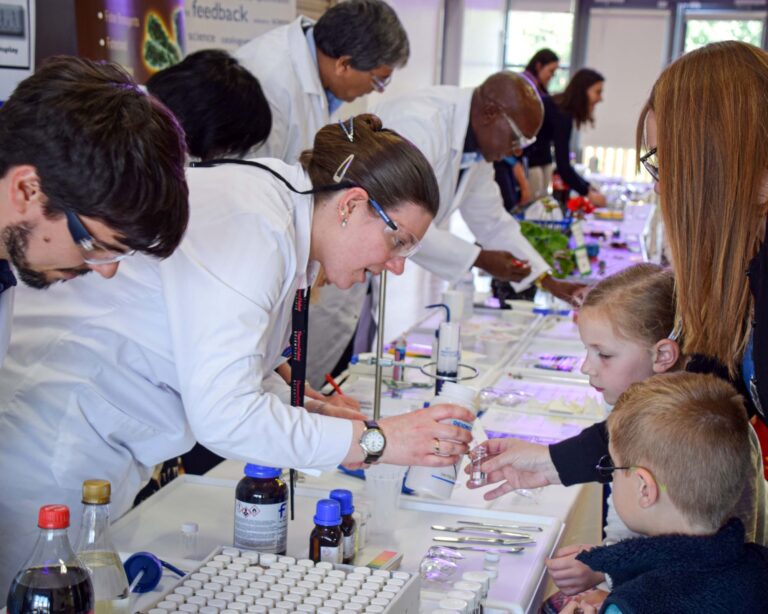
The study examined the research-based public engagement of academic faculty members in Israel and its impact on their academic careers, focusing on two fields: Public Health and Environmental Studies. Its aim was to develop indicators for evaluating public engagement and to explore ways of integrating this dimension into institutional evaluation, promotion, and reward mechanisms.
Assessment of “Digital Health / eHealth Literacy” Among Medical School Graduates in Israel

This pilot study examined the level of digital health literacy among medical students and graduates of the Technion Faculty of Medicine, using a knowledge and self-assessment questionnaire, curriculum analysis, and in-depth faculty interviews.