


The role of the food industry in the Food Security 2050 Agenda Innovation, Technology, Regulation and Tools
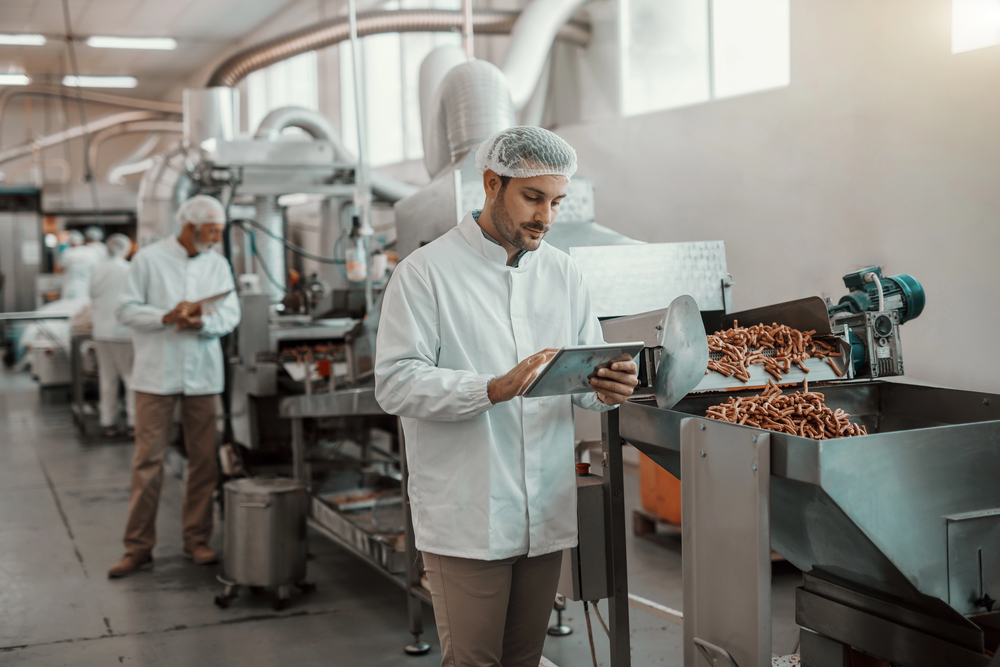
The report “The Role of the Food Industry in the Food Security Plan 2050” presents a broad in-depth picture of the food system in Israel and emphasizes that the food industry is the critical link that connects agriculture, imported raw materials and imports, regulation, technological development and the public capacity to maintain an available, healthy […]
Geothermal energy – Alternatives assessment and environmental regulation

* The research is a chapter in a dedicated Geothermal Regulation report generated by EnergyCom [The full report] Energy-generation facilities affect the environment at every stage of their life cycle. Globally, environmental regulation of geothermal facilities includes the assessments of potential effects on natural resources (Environmental Impact Assessments—EIA) and quantification of expected impacts through Life […]
Human Capital Demand in Artificial Intelligence Technology Development A Study Integrating Automation and Artificial Intelligence Tools

The report examines a novel methodology that integrates automated tools and artificial intelligence to establish a framework for identifying demand trends in AI R&D positions, thereby enabling systematic monitoring of changes over time.
Demand for AI Talent in the Core Domains of Artificial Intelligence Within the Israeli High-Tech Sector

The purpose of this study is to assess the current and future demand for research and development talents in the Israeli high-tech industry within the core domains of artificial intelligence
Geothermal Energy – the Application Potential at the Golan Heights

To assess the feasibility of deriving benefits from geothermal energy in the Golan heights, the Samuel Neaman Institute convened a stakeholder forum to discuss the geothermal geo-physical potential, possible applications, policy requirements, and environmental considerations. Participants included representatives from the Geological Survey of Israel, the Ministry of Energy, the Water Authority, the Ramat Golan Regional Council, and various Israeli companies whose operations are based on heat energy—such as Ormat, Enogia, OASIX, among others.
Before You Launch: An Exhaustive Protocol for Aspiring Entrepreneurs

Many believe that high risk is innate and inherent in entrepreneurship – ‘baked in the cake’. In this study, we argue that the failure rate can be significantly reduced by the intelligent use of a pre-launch protocol — a list of sixty-four “$64 questions”, that ask startup entrepreneurs to consider in advance the challenges and pitfalls they may face in future – in order to anticipate and prepare.
Triple Helix Model and the Israeli Magnet Program: A Comparative Approach to National Innovation Programs with Implications for Turkey
The objectives of this dissertation are to examine science, technology and innovation policies, national innovation system and networking theories to refine the concepts and indicators for the formation of innovation networks and to identify the conditions for international innovation networks. It specifically focuses on the Triple Helix model of Etzkowitz and Leydesdorff (1994), which has […]
Entrepreneurial Theory and Practice: Immigrant Opportunities
All over the world, many immigrants and their children have turned to small business when faced by the limited opportunities open to them in the labor market. For Israel, essentially a country of immigrants, worldwide experience in this area is of great significance. The recent wave of immigration from the former Soviet Union has greatly […]
An Evaluation of the Promotion of Immigrant Entrepreneurship in the Haifa Area

The goals of the current research are to establish the entrepreneurial interests and self estimated ability for business success of the immigrant population. In the current research four principle hypotheses may be defined. Overall, our goal was to obtain an indication of immigrant business potential and to assess the ability of SBDC (“MATT”) to reach […]
Innovation at the Crossroads between Science and Technology
The book contains the papers presented at a S.Neaman conference bearing the same name. The objective was to create a dialog between scientists and engineers and philosophers and historians of science and technology.