


Human Resources Policy in an Age of Change, 1994, (Internal Report)
Open-ended discussions were held with managers and group leaders, most of whom have technical responsibilities. The agenda included: (a) The nature of the technical problems faced in process and product development and innovation, or that arise in production and servicing; (b) The role of the capabilities and experience of individuals in the solution of such […]
The Scarcity of Electronics Engineers and Computer Sciences Graduates in Companies Belonging to the Electronics Industry Association.

This report summarizes a survey that was conducted in the months January-June 1997 in order to understand the shortage of electronic engineers and computer science graduates in companies incorporated in the Society of Electronic Industries. The survey was prepared by Ing. David Kohn and Ilana Shalev of the Samuel Neaman Institute at the initiative of […]
Trends in Demand for Electronics Engineers and Graduates of Computer Sciences

This report sums up a survey on electronic companies members of the Union of Electronic Industries, conducted during the months May and June 1993. The survey used questionnaires which the companies were requested to fill out. It included the following items: Identifying information about the company, sort of ownership, money (sales, exports, R&D budget), manpower, […]
Principles and Systems for Planning of Human Resources in Research and Technology in the OECD Countries, and Lessons for Israel

The aim of manpower planning is to ensure efficient use of human resources in a certain country or economic branch, or in a certain company from the point of view of both economic and social development. Opinions differ as to the need for manpower planning and even among those who believe that manpower planning is […]
Manpower Needs in the Maritime Sector as a National Resource

This report summarizes Part A of the work. The research aims to examine the following aspects in the field of ‘The Sea as a National Resource’: what professional disciplines are required, what educational continuum is currently provided within academic institutions, what human resource needs will be required in the field, what gaps exist, and what recommendations are needed to fill these gaps. The work will help expand understanding and knowledge regarding future scientific and technological human resource requirements for the field, providing background and a situation assessment that will contribute to policy-making processes and strategy development for investments in human resource training.
Indicators for evaluating the involvement of university researchers in the transfer of knowledge to society – Scientific and technological human capital – Selected topics – Part II
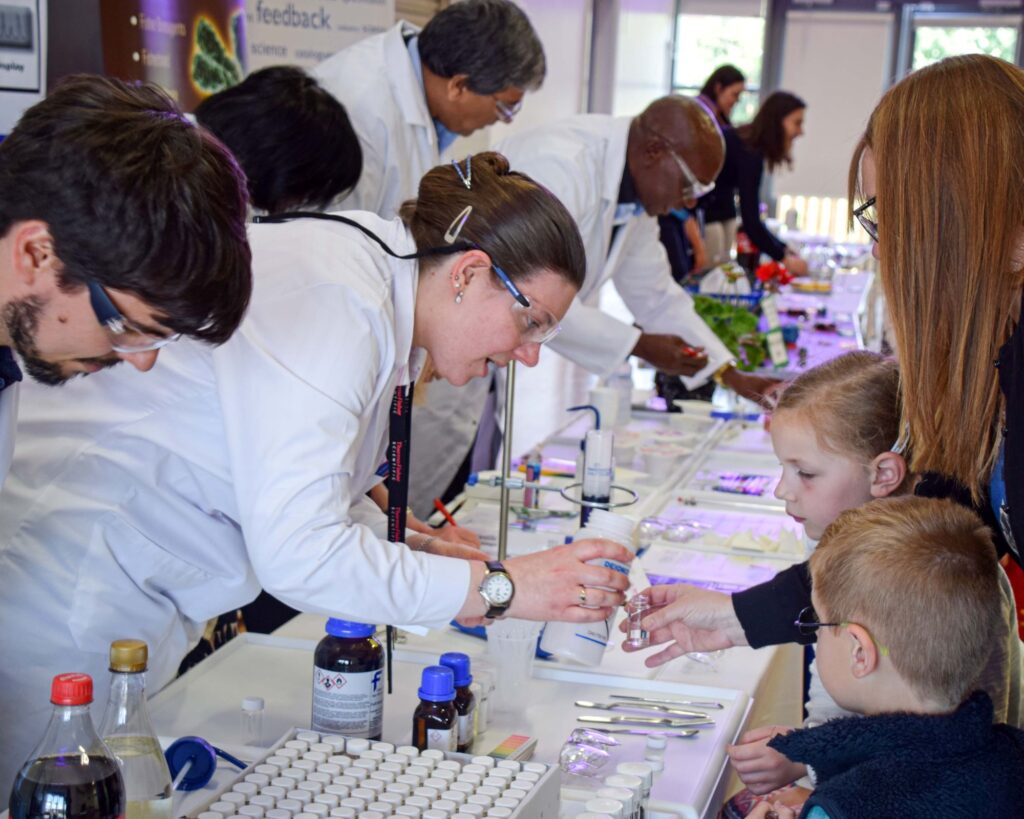
The current study, conducted at the Shmuel Naaman Institute, focused on reviewing international practices for defining, measuring, and encouraging social engagement among academic staff in countries such as the UK, the Netherlands, Australia, and New Zealand. The report includes an analysis of existing reports on metrics for social engagement by researchers, a review of metrics for measuring research impact on society by the Times Higher Education Impact Ranking, and an examination of incentive models at universities in Europe.
Self-efficacy, Interpersonal Skills and STEM Career Choice The Case of the FIRST Project
In view of the acute lack of STEM professionals, there is dire need to encourage more students to elect STEM studies. The robotics program For Inspiration and Recognition of Science and Technology (FIRST), whose participants are students 5–18 years old, employs project-based learning (PBL) principles to develop interpersonal skills. The FIRST program applies science, technology, […]
Absorption of Senior Israeli and Foreign Researchers in Israeli Universities
This research, carried out at the request of the Israel Academy of Sciences and Humanities, relates to Israeli and foreign researchers who were senior faculty members in universities abroad and chose to accept position of Associate or Full Professor in Israeli universities.The study provides a recent mapping of these researchers in Israel including their research […]
Profile of “Outstanding Socially Committed Leadership”

This research employs qualitative methods to present the profiles of graduates from the Edmond de Rothschild Partnerships Programs as committed social leaders who work towards narrowing social and economic gaps within Israeli society. The study examines how these graduates influence the communities they have emerged from or the frameworks in which they have been placed, […]
Mapping continuing and external learning for academia graduates in the STEM areas, and the expected needs for LLL in the areas of emerging technologies
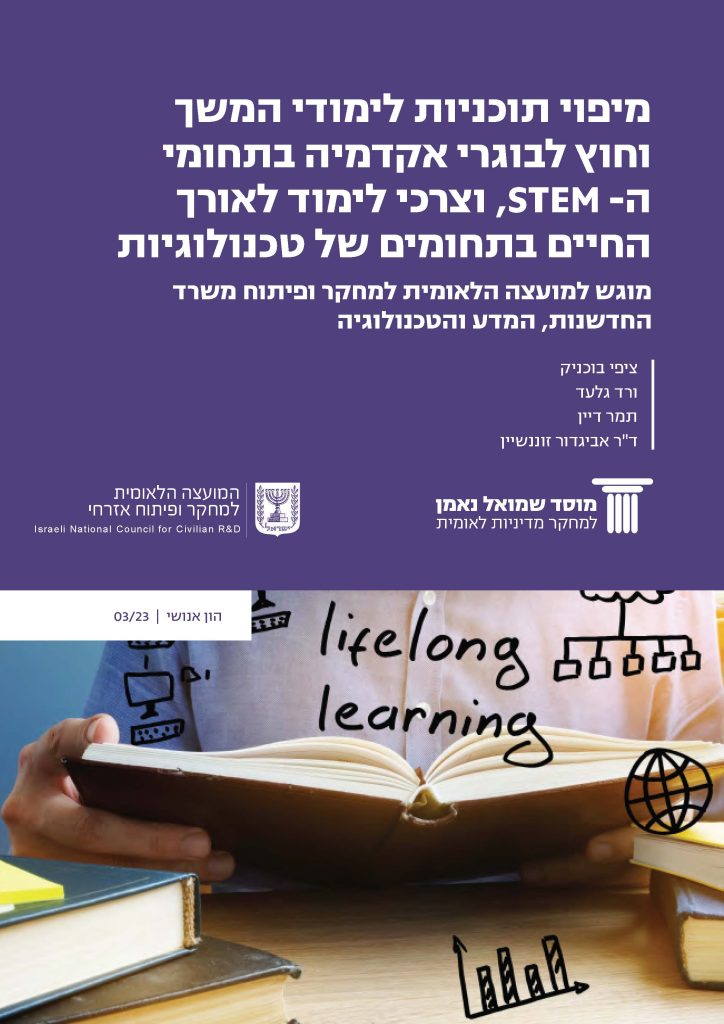
Lifelong Learning (LLL) represents an additional stage in the “education chain,” supplementing primary, secondary, and tertiary education. LLL should systematically impart essential knowledge, abilities and skills across various domains that are in demand in the labor market. LLL opportunities should be accessible to all graduates, enabling them to continue advancing through self-directed learning or formal […]