


Energy Forum 49: Integrating hydrogen into the Israeli energy sector
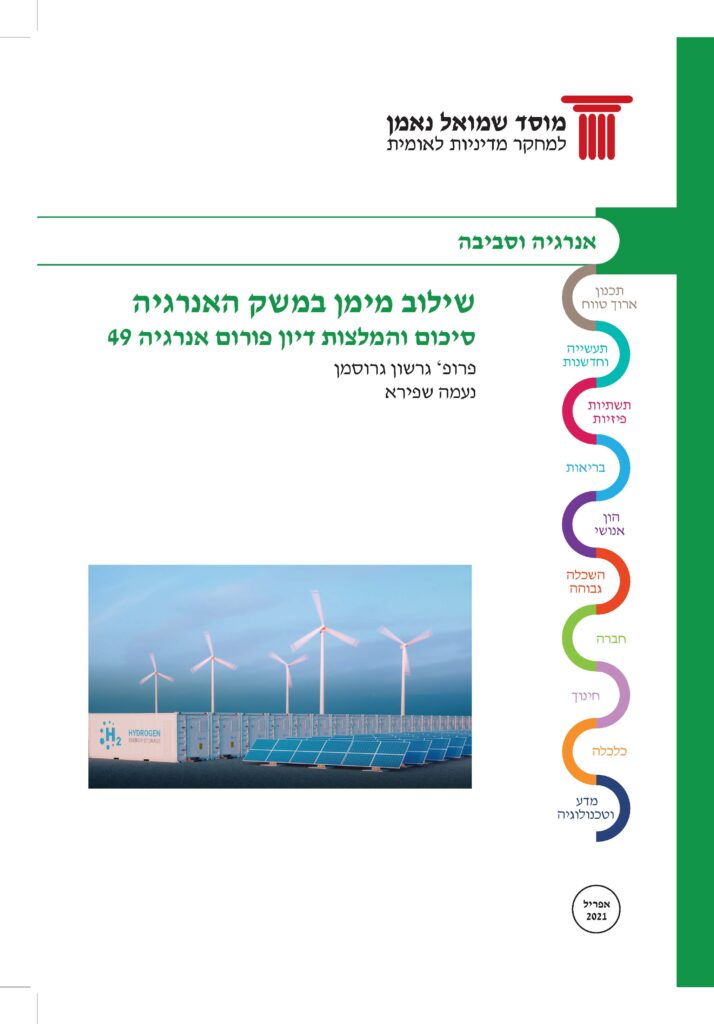
Hydrogen is the most common element in nature but rarely exists in its pure form in nature. It is possible to produce hydrogen from water through the electrolysis process by using electricity. In addition, it is possible to produce hydrogen from organic materials, such as natural gas and coal, using several methods of reforming and […]
Greenhouse Gas Emissions Reporting and Registration System in Israel: Summary of Reports for 2019

63 companies and organizations submitted their reports to the Voluntary GHG Registry in 2019 to the Ministry of Environmental Protection. Each of the reporting companies, enclosed a signed statement regarding the reliability of the data, as required by the Reporting and Registration System, which was developed by SNI in cooperation with the Ministry of Environmental […]
Review of the Impact of Natural Gas Based Transportation Fuels on Air Quality
As Israel attempts to diversify its energy sources, its use of natural gas is rapidly expanding, taking advantage of discovered resources off Israel’s shores in the Eastern Mediterranean. Due to expansion of offshore operations and broader introduction of natural gas into the Israeli economy, emissions of associated air pollutants along with other potential environmental and […]
Private electric transportation readiness guide for municipalities – 2nd Edition
Electric mobility fundamentally changes the demand patterns of energy used for the transportation of people and goods, which is a vital share of any modern economy. The gradual replacement of internal combustion engine (ICE) vehicles with electric vehicles (EVs) is expected to carry broad implications over the energy sector, as well as both the natural […]
Energy Forum 48: Energy in a Smart City
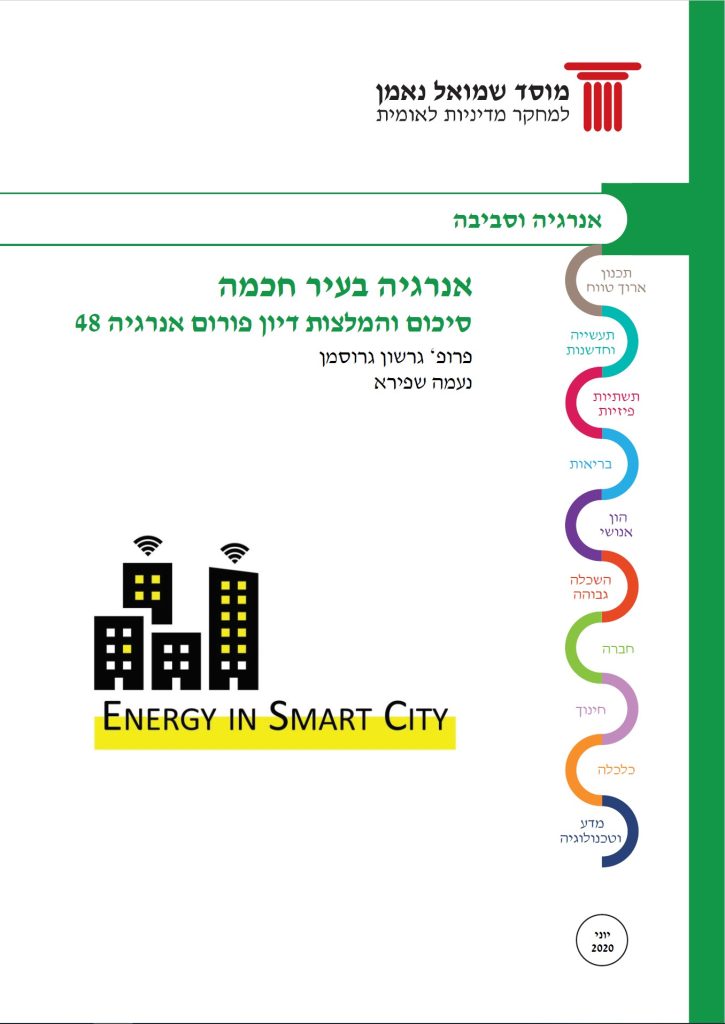
Most of the world’s population now resides in cities. By 2030, the population of the cities around the world is expected to grow from 3.3 billion to 5 billion people. In Israel, approximately 6 million residents live in urban communities. Because of resource constraints, it may become difficult to provide all the services to city […]
Assessment of Natural Gas Loss from the Well-to-Tank Supply Chain of Natural Gas Based Transportation Fuels
Methane (CH4) is the primary component of natural gas and the second largest contributor to greenhouse gas (GHG) emissions, following carbon dioxide (CO2), and is thus the focus of global efforts to reduce the warming of the atmosphere. The global warming potential of methane is over 25 times that of CO2. Methane also contributes to […]
Greenhouse Gases emissions registry in Israel accounting and reporting protocol

The Israeli GHG registry was designed by collaborate team from the environmental protection ministry, The Samuel Neaman Institute and Ecotraders Ltd with a wide team of stake holders. The goal of the team was to develop a protocol with clear instructions that will guide organizations and companies from all sectors through the process of accounting […]
Characterizing master plan for the industrial park Mishor Rotem
Industrial zone Mishor Rotem is the largest in Israel. Some major industries already reside there, hence the purpose of this research is to characterize a master plan for future development and realization of its national-wise, great potential.
Energy Forum 47: Combined Photovoltaic and Storage Systems to Produce Electricity From Solar Energy
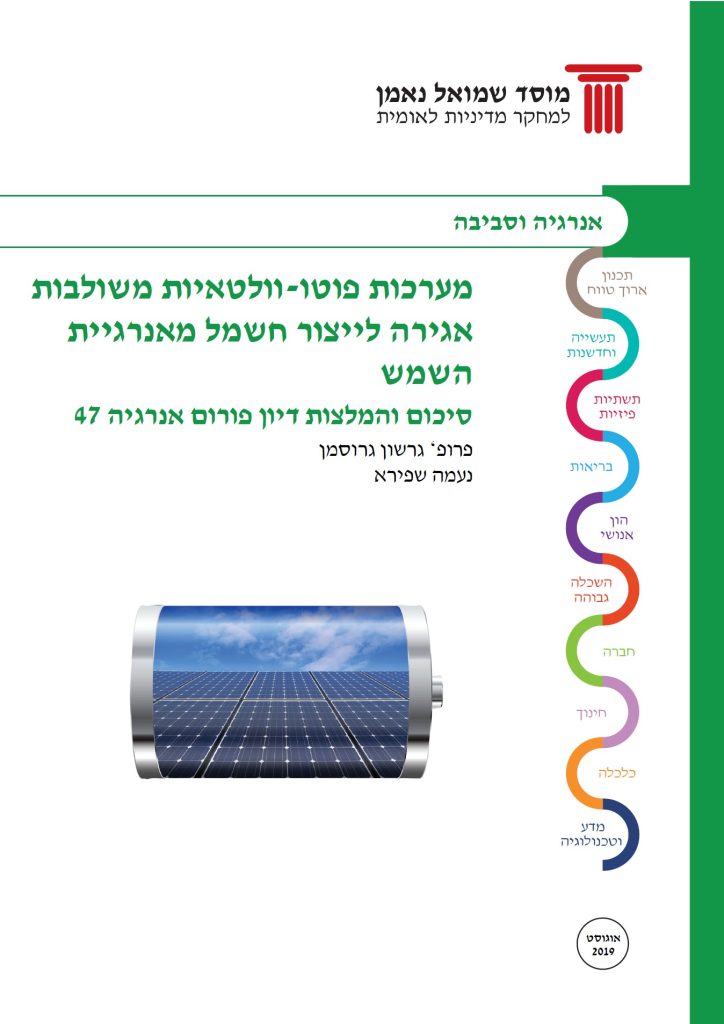
In 2018, installations providing more than 100 giga-watts of solar energy were built worldwide, and the total global capacity of this energy was higher than 500 giga-watts. This volume represents an increase of 4% as compared to 2017, in comparison with an increase of 30% and 50% in the previous two years, respectively. In 2018, […]
Greenhouse Gas Emissions Reporting and Registration System in Israel: Summary of Reports for 2017

65 companies and organizations submitted their reports to the Voluntary GHG Registry in 2017 to the Ministry of Environmental Protection. Each of the reporting companies, enclosed a signed statement regarding the reliability of the data, as required by the Reporting and Registration System, which was developed by SNI in cooperation with the Ministry of […]